 Image 1 of 2
 Image 2 of 2
Visual senses are greatly reduced without light and our eyes use photoreceptors called rods and cones at different times of the day.
There are three types of cones, each dedicated to detecting different wavelengths (red, green, and blue), when combined can register all the colours. But when the light fades the rods are activated, they’re highly sensitive, 1000 more times sensitive to the cones but they don’t register colour.
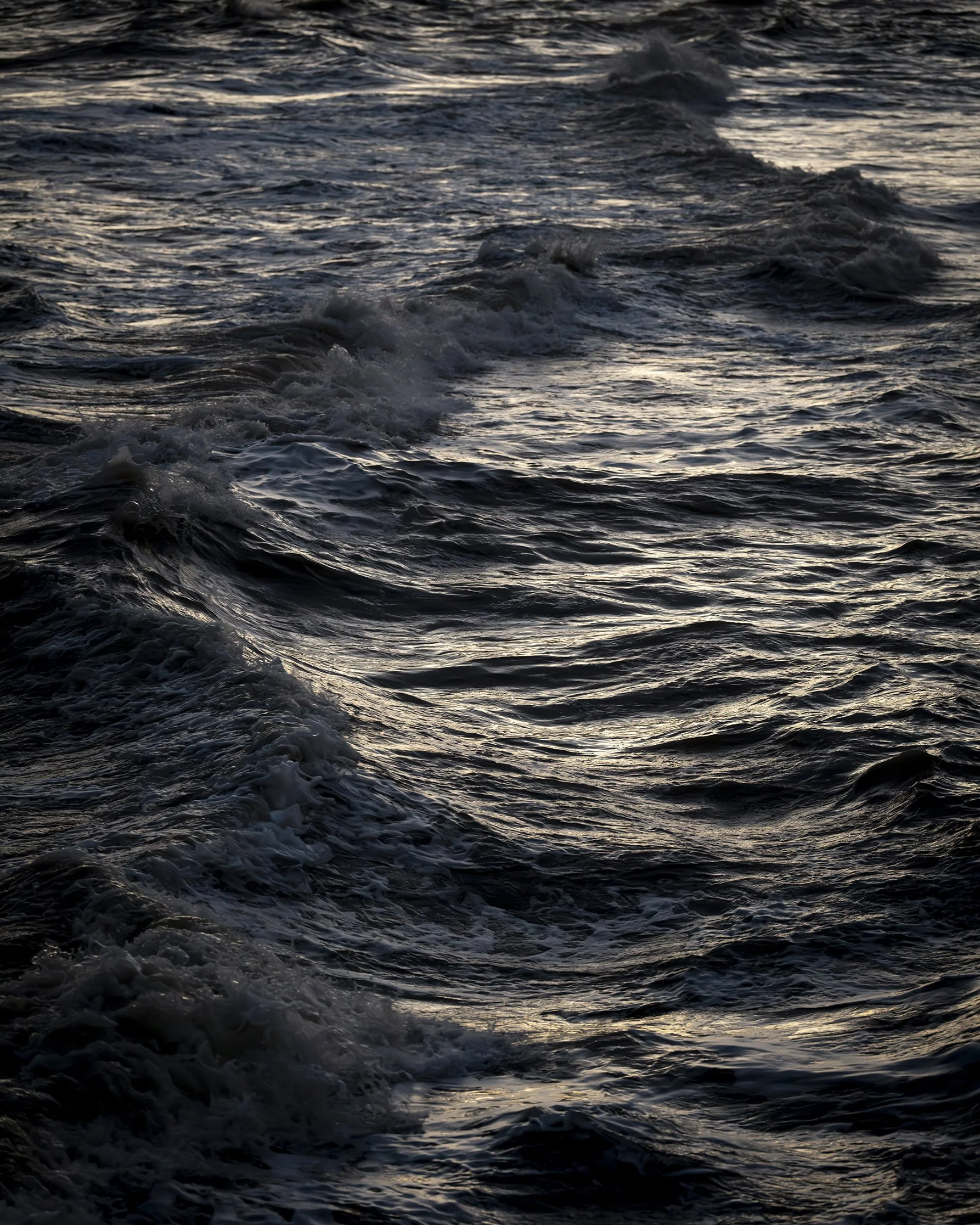
There is a drama here caused by the blackness of the sea, but a calmness too - no huge crashing waves but constant movement and ever-changing shape. The sea just gets blacker as the day fades to night but the sound remains the same.
Visual senses are greatly reduced without light and our eyes use photoreceptors called rods and cones at different times of the day.
There are three types of cones, each dedicated to detecting different wavelengths (red, green, and blue), when combined can register all the colours. But when the light fades the rods are activated, they’re highly sensitive, 1000 more times sensitive to the cones but they don’t register colour.
There is a drama here caused by the blackness of the sea, but a calmness too - no huge crashing waves but constant movement and ever-changing shape. The sea just gets blacker as the day fades to night but the sound remains the same.